
This requires accrued cost diligent monitoring and a clear understanding of accounting periods to ensure accurate financial reporting. This adherence to standards builds trust with investors, lenders, and other stakeholders. Typically, you create them at the beginning of the new accounting period, right after closing the books for the previous period. For example, if you accrued salaries at the end of January, you’d likely make the reversing entry on February 1st, before processing payroll. While reversing entries are common for routine accruals like salaries and utilities, they’re not always necessary.
Accrued Expenses Example
To continue with the preceding example, the $500 entry would reverse in the following month, with a credit to the office supplies expense account and a debit to the accrued expenses liability account. The net result in the following month is therefore no new expense recognition at all, with the liability for payment shifting to the accounts payable account. Accrual accounting enables businesses to capture a true and fair view of their financial performance and position.
Benefits of accrual accounting

The timing of payment distinguishes accrued costs, incurred but unpaid, from prepaid expenses, reflecting the variance in financial obligations and recognition at the end of the accounting period. In accrual accounting, accrued expenses are recognized when incurred, not when cash is paid, ensuring accurate financial reporting. This is a cornerstone of accrual accounting, the preferred method under Generally Accepted Accounting Principles (GAAP).

205-33 Professional and consultant service costs.
- Accounts payable arise only after you’ve received an invoice for goods or services.
- Like accrued expenses, prepaid expenses are also recorded in the reporting period when they are incurred under the accrual accounting method.
- An accountant enters, adjusts, and tracks “as-yet-unrecorded” earned revenues and incurred expenses.
- In the reporting period that the cash is paid, the company records a debit in the prepaid asset account and a credit in cash.
- While it takes more work, accounting software like Accounting Seed makes it easy.
- Accrual accounting gives the company a means of tracking its financial position more accurately.
Below breaks down the entries necessary for accruing Cash Flow Statement the expense and then the removal after payment is made. Understanding the difference between cash basis and accrual basis accounting is fundamental for business owners and accounting departments. We’ll explore the key differences between the two methods as well as the advantages and disadvantages of both methods.
- Detailed reports help you compare accruals with actual invoices, spot trends, and support planning and budget management.
- It incurred $1,200 in expenses in the same month, but hasn’t yet paid that amount.
- This journal entry recognizes the wages expense in the same accounting period in which the employees provided their services.
- This is counteracted to zero when the cash is paid (a credit) and the expense is recorded (a debit) in the new accounting period – since the expense was recorded in the previous period when it was accrued.
- It also ensures that expenses are properly matched with the period in which they were incurred.
- Expenses are accrued to have a better understanding of financials through a holistic view of what’s actually due.

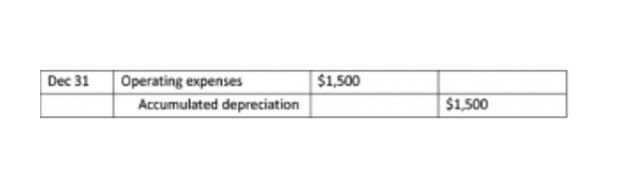
However, growing companies often switch to accrual accounting to improve their financial insight and reporting. For example, let’s assume a company hires an IT consultant to upgrade its servers at the end of April. While the invoice hasn’t yet been submitted, the cost for the work will be $1,500. Because the company hasn’t paid this yet, it will be noted as an accrued expense. The accrual method of accounting is considered a more laborious form of accounting because it involves a dual entry.
- Taxpayers are typically required by the appropriate taxation authority to consistently use the method of accounting that accurately captures the entity’s true income.
- All information published on this website is provided in good faith and for general use only.
- Additionally, utilities or unreimbursed employee travel are other accrued expenses examples.
- Accrued expenses are recorded as an adjusting entry at month or year end to record expenses on the books that have not yet been recorded.
- But even with the disadvantages, the results are worth the extra work, since accruing expenses provides a much clearer picture of your finances.
- This improved transparency empowers you to make more informed decisions about resource allocation and manage your working capital more effectively.
- This principle dictates that expenses should be recorded in the same accounting period as the revenue they helped generate.
Until the balance drops below the designated cap, they are not eligible to earn additional PTO. Some states and local jurisdictions explicitly prohibit “use-it-or-lose-it” PTO policies. In such cases, employers must generally allow employees http://www.greenbusinessteam.se/blog/2022/09/26/gusto-bbb-complaints-better-business-bureau/ to carry over accrued, unused PTO from year to year or pay them for the remaining balance at year’s end. Employers may also be required to pay out any accrued, unused PTO when an employee leaves the organization. In some other states, use-it-or-lose-it policies are only permitted if the employer officially documents and communicates the rule to employees. Employers who offer PTO to full-time employees generally have no obligation to extend it to part-time employees.